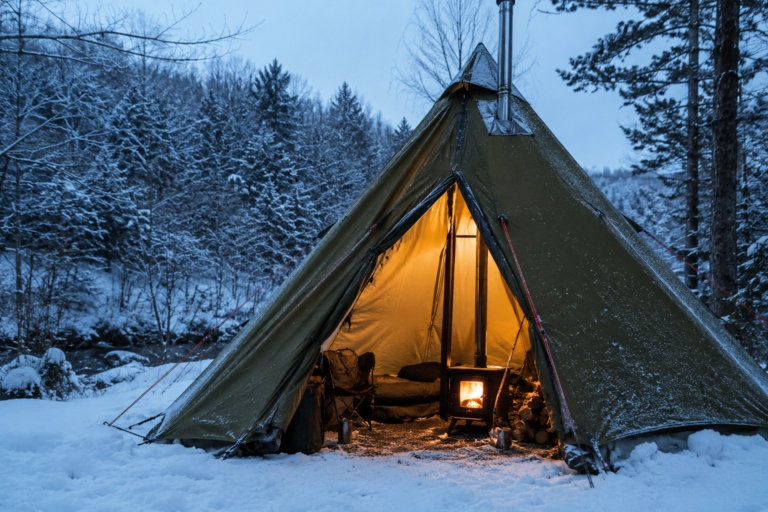
Discover the essential gear you need for your first hot tent camping trip. Learn what to pack, why it matters, and how to stay warm, safe, and comfortable in winter.
Essential Gear for First-Time Hot Tent Camping
Hot tent camping has become one of the best ways to enjoy the outdoors during the colder months. Unlike traditional camping, a hot tent uses a portable wood-burning stove to provide warmth, allowing campers to stay comfortable even when temperatures drop below freezing.
If you’re planning your first hot tent adventure, packing the right equipment is essential. Forgetting a few important items can quickly turn an enjoyable trip into an uncomfortable experience.
This guide covers the essential gear every beginner should bring for a safe, warm, and enjoyable hot tent camping trip.
1. Hot Tent
The hot tent is the foundation of your camping setup. Unlike regular tents, hot tents are designed with a stove jack—a heat-resistant opening that allows a chimney pipe to pass safely through the tent roof or wall.
When choosing your first hot tent, look for:
- Heat-resistant stove jack
- Waterproof fabric
- Strong aluminum poles
- Reinforced guy-out points
- Enough space for people and gear
Choose a tent slightly larger than you think you’ll need. The wood stove takes up floor space, so extra room makes the tent much more comfortable.
2. Portable Wood Stove
A tent stove provides warmth, dries wet clothing, and allows you to cook meals.
Features to consider include:
- Stainless steel construction
- Foldable legs
- Removable chimney
- Air vent controls
- Large firebox
A quality stove can keep your shelter warm for several hours while also serving as your cooking station.
3. Heat-Resistant Stove Mat
Safety should always come first.
Place a fireproof stove mat underneath your stove to protect the tent floor from sparks, hot ash, and radiant heat.
Never place the stove directly on the tent floor.
4. Sleeping Bag
Even though the stove keeps the tent warm, it will cool down overnight once the fire burns out.
Choose a sleeping bag rated for temperatures lower than what you expect during your trip.
Down sleeping bags provide excellent warmth while remaining lightweight, while synthetic bags perform better in damp conditions.
5. Insulated Sleeping Pad
Many beginners underestimate how much body heat is lost through the ground.
An insulated sleeping pad creates a thermal barrier between you and the cold earth, making a huge difference in comfort and warmth.
Higher R-value pads offer better insulation for winter camping.
6. Firewood and Fire Starters
Your stove needs fuel.
Pack dry hardwood whenever possible because it burns longer and produces more heat than softwood.
Useful fire-starting supplies include:
- Waterproof matches
- Ferro rod
- Fire starters
- Dry tinder
- Small hatchet
Always bring more firewood than you think you’ll need.
7. Camp Chair
A lightweight folding chair makes relaxing around the stove much more enjoyable.
After a day of hiking, you’ll appreciate having a comfortable place to sit while cooking, reading, or simply enjoying the warmth.
8. Cooking Equipment
A simple cooking kit is usually enough.
Consider bringing:
- Pot
- Frying pan
- Camping kettle
- Mug
- Spoon
- Fork
- Knife
- Cutting board
Many campers cook directly on top of their wood stove.
9. Lighting
Winter nights are long.
Bring multiple light sources, including:
- LED lantern
- Headlamp
- Flashlight
- Extra batteries
A headlamp is especially useful when gathering firewood after sunset.
10. Warm Clothing
Layering is the key to staying comfortable.
A good clothing system includes:
- Moisture-wicking base layer
- Fleece mid-layer
- Insulated jacket
- Waterproof outer shell
- Warm socks
- Gloves
- Winter hat
Avoid wearing cotton, as it absorbs moisture and loses insulation when wet.
11. Water Storage
Cold weather can cause dehydration even when you don’t feel thirsty.
Bring insulated water bottles to prevent freezing.
If camping in remote areas, carry a water filter or purification tablets.
12. Emergency Kit
Never head into the wilderness without emergency supplies.
Your kit should include:
- First aid kit
- Multi-tool
- Emergency blanket
- Compass
- Map
- Whistle
- Power bank
- Phone charger
- Repair tape
Being prepared can make all the difference in unexpected situations.
Bonus Tips for First-Time Hot Tent Campers
Before your first trip:
- Practice setting up your tent at home.
- Learn how your wood stove operates.
- Check weather forecasts before leaving.
- Keep ventilation open while using the stove.
- Never leave the stove unattended.
- Bring extra dry clothing.
- Store firewood under cover.
- Tell someone your camping location and return time.
Common Mistakes Beginners Make
Many first-time campers make the same mistakes.
Avoid these common problems:
- Bringing too little firewood
- Choosing a sleeping bag that’s not warm enough
- Using wet wood
- Forgetting an insulated sleeping pad
- Blocking tent ventilation
- Overpacking unnecessary gear
- Ignoring weather conditions
Learning from these mistakes will make future trips much more enjoyable.
Final Thoughts
Hot tent camping offers one of the most comfortable ways to enjoy winter wilderness. With the right equipment and preparation, you’ll stay warm, cook great meals, and experience the outdoors in a completely different way.
Start with quality essentials, practice your setup before your trip, and always put safety first. As your experience grows, you can upgrade your gear and refine your camping system to suit your style.
Whether you’re camping in snowy forests or chilly mountain valleys, the right gear will help you enjoy every adventure with confidence.
Frequently Asked Questions
Do I need a wood stove for hot tent camping?
Yes. A hot tent is designed to be used with a portable wood-burning stove, which provides both heat and a cooking surface.
Can beginners go hot tent camping?
Absolutely. With the right gear, proper preparation, and attention to safety, hot tent camping is beginner-friendly.
What temperature sleeping bag should I bring?
Choose a sleeping bag rated at least 5–10°C (10–18°F) lower than the coldest temperature you expect during your trip.
How much firewood should I bring?
It’s better to bring more than you think you’ll need. Cold weather and long winter nights often require more fuel than beginners expect.